Is a paid VPN worth it? What a VPN does, what it does not, and when you should buy one
A VPN shifts trust from your network to its provider. When that trade is worth paying for, what free VPNs really cost, and what to check before you subscribe.
A paid VPN is worth buying in exactly one situation: you need to move your traffic through a network operator you do not trust, and you are willing to hand that traffic to a different company instead. A virtual private network (VPN) is a subscription service that routes your internet traffic through servers the provider controls, so your internet provider sees one encrypted pipe instead of which sites you visit and websites see the provider’s IP address instead of yours. That trade — trust moves from your network to the VPN company — is real and useful for work remote access, for hotel or café networks you cannot verify, and for keeping your internet provider from seeing and logging your domains. It does almost nothing against phishing, malware, ads, or account takeover, and it will not make you anonymous. If no specific network question is bothering you, the honest answer is Consumer Reports’: not everyone needs one, and the money may buy less than the marketing promises.
This article is written for readers in the United States deciding whether to subscribe, and how to choose one if they do. It is general information, not legal or security advice tailored to your situation.
What a VPN does: it moves your traffic and shifts your trust
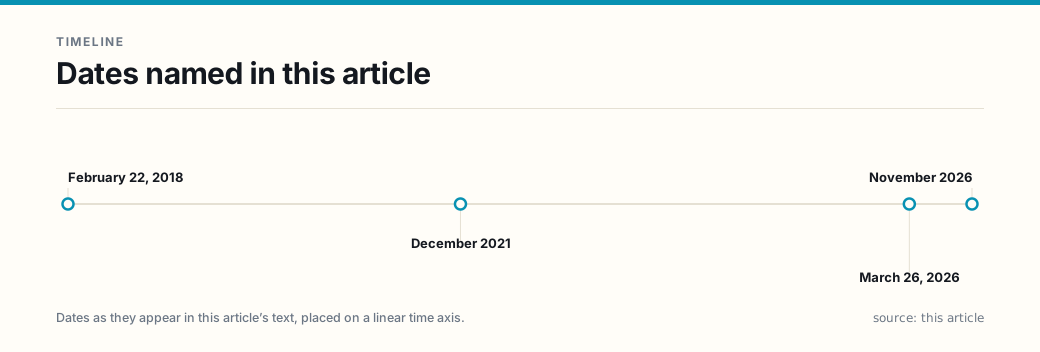
The Federal Trade Commission’s guidance — a business blog post dated February 22, 2018 — describes the mechanism in two sentences: “When you use a VPN app, data sent from your phone – for example, your browsing data or the apps you’re using – is first routed through servers controlled by the VPN provider,” and a VPN app “can make traffic from your phone to a website appear to come from the VPN’s servers.” Some VPN apps also encrypt the data between your phone and the VPN server.
Two consequences follow, and both are what you are actually paying for:
- Your internet provider sees less. Instead of a list of the domains you visit, your provider sees a single encrypted connection to the VPN. That hides your browsing history from the company that carries your traffic — the entity best positioned to log and monetize it.
- Websites see the VPN’s IP address instead of yours. A letter from six members of Congress to Director of National Intelligence Tulsi Gabbard, dated March 26, 2026, describes why that matters: your IP address “can otherwise be used to approximate the user’s location, and in some cases, uniquely identify them.” On a shared VPN server, “a single VPN server will typically be used by hundreds, if not thousands, of users concurrently… all appearing to originate from the same IP address.”
The same trade is what Consumer Reports’ testing identified as the honest description of the product: “By using a VPN, a user essentially transfers trust from their network provider to the VPN provider,” said Roya Ensafi, the University of Michigan professor who leads the VPNalyzer research project. A VPN company sees what your ISP would have seen — and the March 2026 congressional letter notes that Americans “reportedly spend billions of dollars each year on commercial VPN services, many of which are offered by foreign-headquartered companies using servers located overseas.” The Department of Homeland Security’s Cybersecurity and Infrastructure Security Agency, per that letter, has warned that VPNs “have the potential to be vulnerable to surveillance by foreign adversaries.”
What a VPN does not do
The FTC’s guidance is blunt about the limits: “A VPN app generally isn’t going to make you entirely anonymous… It just shifts trust from those networks to the VPN app provider.” In practice the gaps run in four directions:
- It does not hide you from the sites you log into. Google, your bank, and every retailer know exactly who you are once you sign in, and sites “can still use any identifying information you directly share with them… to track you,” per the FTC. Trackers that do not rely on IP addresses keep working.
- It does not stop scams. Mozilla VPN’s own marketing, quoted in Consumer Reports’ testing, says a VPN cannot “prevent you from things like clicking on suspicious links, downloading malware, or being victimized by email fraud.” Phishing arrives by email and text, and malicious downloads arrive inside encrypted HTTPS that a VPN neither inspects nor blocks.
- It does not reliably impersonate a country. The 2026 congressional letter explains the mechanism: “cybersecurity companies maintain and sell lists of the IP addresses of commercial VPN servers, which other companies, including streaming platforms, subscribe to,” so “VPNs are far more effective at hiding a user’s true location and country than enabling a user to convincingly impersonate a specific country.” Netflix’s own Terms of Use, meanwhile, say you “may access Netflix content primarily within the country in which you have established your account,” and that availability “will vary by geographic location.”
- It does not shield your identity from U.S. government surveillance by itself. The same letter raises this to the intelligence community: under the National Security Agency’s declassified targeting procedures for Section 702 of the Foreign Intelligence Surveillance Act, “a person known to be located outside the United States or whose location is not known will be presumed to be a non-United States person.” The senators’ point is that a VPN’s effect on how U.S. law protects you is unresolved — not that a VPN protects you.
Consumer Reports found the gap between marketing and reality to be the industry’s norm: in its December 2021 test of 16 consumer VPNs, “12 out of 16 of the VPNs we looked at either inaccurately represented their products and technology, or made hyperbolic or overly broad claims about the kinds of protection they provide their users.” Its companion survey of 1,252 U.S.-based VPN users found “just under 40% of users surveyed have a wrong understanding of what protection VPNs actually provide.”
When buying one makes sense — and when it does not
| Your situation | Does a paid VPN help? | Why |
|---|---|---|
| Your employer offers remote access | Use the employer’s VPN, not a consumer one | A work VPN is your company’s own controlled tunnel; a consumer VPN is an unrelated third party your employer did not choose |
| You work on hotel, café or airport Wi-Fi you cannot verify | Yes — or better, use cellular | A VPN hides which hosts you connect to from the venue’s network; for high-value tasks, cellular removes the shared network entirely (see our public Wi-Fi guide) |
| You do not want your home internet provider logging which sites you visit | Yes, this is the core paid use case | Your ISP sees one encrypted pipe; the VPN sees the domains instead. Compare policies before you pay, not after |
| You want to watch another country’s streaming catalog | Unreliable, and the terms limit access anyway | Platforms block known VPN server IP addresses; Netflix’s Terms of Use tie access to your account’s country |
| You want to block ads, trackers, or malware | No | That is ad-blocking and browser hygiene; a VPN does not inspect encrypted traffic |
| You fear phishing, account takeover, or data breaches | No | A password manager, passkeys and two-factor authentication address those; a VPN does not |
| Someone told you “everyone needs a VPN” | Not a reason | Consumer Reports: “not everyone needs a VPN” |
What free actually costs, and what a fair price looks like
The FTC’s guidance explains the free economics: “Many VPN apps are free because they sell advertising within the app, or because they share your information with (or redirect your traffic through) third parties.” A free VPN that pays for its servers by selling what it sees is the opposite of the product you are shopping for.
There are exceptions worth knowing. Proton VPN’s free plan, according to its own page, has “no data or speed limits,” shows no ads, and is funded because “Our free VPN service is supported by paying users” — a model that does not require monetizing free users. And Consumer Reports’ top-scoring services show that price and honesty are separate axes: Mullvad charges one flat rate of €5 per month including VAT on any plan length (about $5.60 at the November 2026 exchange rate of roughly €1 = $1.11 — our conversion; an account covers up to 5 devices), while Proton VPN Plus lists at $9.99 per month.
Two price traps are specific to this category:
- The intro price is not the renewal price. Proton’s common promotion is $1.00 for the first month with a $9.99 monthly renewal. Consumer Reports’ survey work noted that “Many VPNs heavily market around pricing and discounts, sometimes even succumbing to deceptive design.” The decision number is what the card gets charged in month two and year two, not the banner.
- The longest discount is a commitment to a service you have not tested. If a provider offers a 30-day money-back guarantee (Proton’s is 30 days; Mullvad’s is 14 with payment-method exclusions), use the refund window to test the things you actually bought it for — speed on your own network, the specific network scenario, the streaming test if that is why you are buying.
The five checks to run before you subscribe
Consumer Reports’ evaluation framework, in the testers’ own words, looked for “VPNs that are open source, public about their ownership, have public third-party security audits, support the modern WireGuard protocol, and accurately present their services and underlying technology.” Those five checks are a usable shopping list:
- Open-source clients — code you or independent researchers can inspect, not just trust.
- Public ownership — you should be able to learn which company and which country you are handing your traffic to. If ownership is hidden behind shell companies, that is the answer.
- A public third-party audit — a no-logs claim is a sentence on a website until an outside auditor verifies it; look for the actual report, not just the word “audited.”
- Modern protocols — WireGuard is the current standard; legacy protocols are slower and some “VPN apps” do not encrypt at all, per the FTC’s warning that “Not all VPN apps actually encrypt your information.”
- Honest marketing — the strongest scoring signal Consumer Reports found. Its three top performers, Mullvad, IVPN and Mozilla VPN, were the ones that did not overpromise; IVPN says outright, “we don’t promise anonymity or ‘military-grade encryption’.” A vendor whose ad claims total anonymity is telling you how it describes its own product.
One more habit pays off regardless of vendor: the review ecosystem itself is noisy. In Consumer Reports’ survey work, several VPN providers the team interviewed alleged that “the VPN review ecosystem is largely pay-to-play,” so a top-ten ranking is not a safety certificate.
Is it legal?
Ordinary consumer VPN use in the United States is legal: we can point to no federal statute banning it, and the March 2026 letter from six members of Congress to the Director of National Intelligence describes the mainstream reality — “Heeding the advice of federal agencies such as the Department of Defense, Federal Bureau of Investigation, National Security Agency, and Federal Trade Commission, millions of Americans use commercial VPN services.” Other countries differ — some restrict or license VPN use — so if you travel, check local law before you connect. And if your question is what a VPN does or does not do to your legal protections against surveillance, that same letter shows even the legislators are still asking the intelligence community that question.
The one-sentence answer
Buy a paid VPN when you have a specific network you do not trust to carry or observe your traffic — remote work, an ISP whose logging you dislike, an unverifiable Wi-Fi network — choose one by Consumer Reports’ five checks rather than by ad claims or review-site rankings, pay attention to the renewal price rather than the intro price, and skip it entirely if what you actually want is protection from scams, malware, or account takeover.
Related guides
- Are public Wi-Fi networks safe to use? — the network half of this decision, including when cellular beats any VPN.
- Is identity theft protection worth it? — the same is-it-worth-the-subscription question for a different product.
- Do you need a password manager? — what actually protects your accounts.
- Two-factor authentication: how to set it up — the control the FTC’s guidance actually lists.
Frequently asked questions
- What does a VPN actually do?
- It routes your internet traffic through servers the VPN company controls. The Federal Trade Commission's February 2018 guidance puts it plainly: 'When you use a VPN app, data sent from your phone – for example, your browsing data or the apps you're using – is first routed through servers controlled by the VPN provider.' Your internet provider then sees one encrypted connection to the VPN instead of which sites you visit, and websites see the VPN's IP address instead of yours.
- Will a VPN make me anonymous?
- No. The FTC's guidance says 'A VPN app generally isn't going to make you entirely anonymous' and 'It just shifts trust from those networks to the VPN app provider.' Sites can still identify you through what you type and through trackers that do not rely on your IP address, and the VPN company itself sees your traffic — which is why the anonymity claim is the single most common thing Consumer Reports found overpromised.
- Do I need a VPN on public Wi-Fi?
- Usually no. Most sites you use are already encrypted with HTTPS, and the FTC's current public Wi-Fi guidance — passwords, two-factor authentication, current software, automatic updates — does not list buying a VPN among its recommendations. For high-value tasks on a network you cannot verify, cellular data is simpler than any VPN. Our public Wi-Fi guide covers this in detail.
- Can a VPN unblock Netflix catalogs from other countries?
- Less reliably than VPN marketing suggests, and the terms say the library is location-bound anyway. Netflix's Terms of Use state you 'may access Netflix content primarily within the country in which you have established your account.' And platforms actively block VPN traffic: a March 2026 letter from six members of Congress to the Director of National Intelligence explains that companies sell lists of commercial VPN server IP addresses that streaming platforms subscribe to, so 'major streaming platforms like Netflix will block region-restricted content to users accessing the service from a known VPN server.'
- Are free VPNs safe?
- The business model is the warning. The FTC's guidance says: 'Many VPN apps are free because they sell advertising within the app, or because they share your information with (or redirect your traffic through) third parties.' There are real exceptions — Proton VPN, for example, offers a free plan it describes as having no data limits, no ads and no activity logs, funded because 'Our free VPN service is supported by paying users' — but a free VPN with no disclosed way to pay for servers deserves the skepticism its economics invite.
- How much should a VPN cost?
- Between about $5 and $10 a month at list price, with the advertised number usually being the renewal price, not the intro price. Proton VPN Plus lists at $9.99 per month (a first-month promotional rate of $1.00 is common), while Mullvad charges one flat rate of €5 per month including VAT on any plan length — about $5.60 at the November 2026 exchange rate — and limits an account to 5 devices. The consumer decision is not the intro price; it is what the card gets charged at renewal.
- What should I look for when choosing a paid VPN?
- Consumer Reports' evaluation framework: VPNs that are open source, public about their ownership, have public third-party security audits, support the modern WireGuard protocol, and accurately present their services and underlying technology. Its testers also treated honesty as a scoring factor — the three services that scored best, Mullvad, IVPN and Mozilla VPN, were the ones whose marketing did not overpromise.
- Does a VPN stop viruses, ads, or phishing?
- No. Mozilla VPN's own marketing, quoted in Consumer Reports' testing, says a VPN cannot 'prevent you from things like clicking on suspicious links, downloading malware, or being victimized by email fraud.' Most phishing and malware arrives inside encrypted HTTPS traffic that a VPN neither inspects nor blocks. If scam messages and malicious downloads are the worry, a password manager, passkeys and two-factor authentication do more work per dollar.
- Is using a VPN legal in the United States?
- Ordinary consumer use is. We can point to no federal statute that bans using a consumer VPN in the United States, and a March 2026 letter from six members of Congress to the Director of National Intelligence notes that 'Heeding the advice of federal agencies such as the Department of Defense, Federal Bureau of Investigation, National Security Agency, and Federal Trade Commission, millions of Americans use commercial VPN services.' Rules in other countries vary, and some restrict or license VPN use — if you travel, check the local law before you connect.
Sources
Each source is a primary or official reference, checked before publication. Links open the original.
- Federal Trade Commission, Business Blog, 'In the market for a VPN app?' (February 22, 2018) — the Commission's plain-language description of the technology and its risks: 'When you use a VPN app, data sent from your phone – for example, your browsing data or the apps you're using – is first routed through servers controlled by the VPN provider. A VPN app can make traffic from your phone to a website appear to come from the VPN's servers. Some VPN apps also encrypt the data sent between your phone and the VPN server.'; 'when you use a VPN app, you're giving the app permission to intercept all of your internet traffic. You shouldn't grant that permission lightly.'; 'Not all VPN apps actually encrypt your information.'; 'A VPN app generally isn't going to make you entirely anonymous. A VPN app will typically obscure the content of your traffic from your internet service provider or public Wi-Fi provider, but it doesn't render you anonymous. It just shifts trust from those networks to the VPN app provider. In addition, sites you visit may be able to determine that you're using a VPN app, and can still use any identifying information you directly share with them (for example, filling out a form with your email address) to track you.'; 'Many VPN apps are free because they sell advertising within the app, or because they share your information with (or redirect your traffic through) third parties.' (ftc.gov/business-guidance/blog/2018/02/market-vpn-app retrieved November 12, 2026)
- Federal Trade Commission, Consumer Advice, 'Are Public Wi-Fi Networks Safe? What You Need To Know' — the Commission's current public Wi-Fi checklist is strong passwords, two-factor authentication, current security software, operating system and browser, and automatic updates; it does not recommend buying a VPN. Because most websites now use encryption, 'connecting through a public Wi-Fi network is usually safe' (consumer.ftc.gov/articles/are-public-wi-fi-networks-safe-what-you-need-know retrieved November 12, 2026)
- Letter from U.S. Senators Ron Wyden, Alex Padilla, Edward J. Markey and Elizabeth Warren and U.S. Representatives Sara Jacobs and Pramila Jayapal to the Honorable Tulsi Gabbard, Director of National Intelligence (March 26, 2026) — 'Heeding the advice of federal agencies such as the Department of Defense, Federal Bureau of Investigation, National Security Agency, and Federal Trade Commission, millions of Americans use commercial VPN services, which purport to protect their privacy by hiding the customer's IP address, and consequently their country, as the source of their internet traffic.'; 'VPNs hide the IP address of a user's phone or computer from websites and apps, which can otherwise be used to approximate the user's location, and in some cases, uniquely identify them.'; 'A single VPN server will typically be used by hundreds, if not thousands, of users concurrently from countries around the world, and their internet traffic will be comingled, all appearing to originate from the same IP address.'; 'VPNs are far more effective at hiding a user's true location and country than enabling a user to convincingly impersonate a specific country. This is because cybersecurity companies maintain and sell lists of the IP addresses of commercial VPN servers, which other companies, including streaming platforms, subscribe to.'; 'Consequently, major streaming platforms like Netflix will block region-restricted content to users accessing the service from a known VPN server, because the company cannot identify the country in which the user is located.'; 'Americans reportedly spend billions of dollars each year on commercial VPN services, many of which are offered by foreign-headquartered companies using servers located overseas. According to the Department of Homeland Security's Cybersecurity and Infrastructure Security Agency, VPNs have the potential to be vulnerable to surveillance by foreign adversaries.'; the letter quotes the NSA's declassified Section 702 targeting procedures: 'A person known to be located outside the United States or whose location is not known will be presumed to be a non-United States person unless such person is identified as a United States person, or the circumstances otherwise give rise to a reasonable belief that such person is a United States person.' (wyden.senate.gov/download/wyden-letter retrieved November 12, 2026)
- Consumer Reports, 'VPN Testing Reveals Poor Privacy and Security Practices, Hyperbolic Claims' (published December 7, 2021, updated September 30, 2022) — 'We found that 12 out of 16 of the VPNs we looked at either inaccurately represented their products and technology, or made hyperbolic or overly broad claims about the kinds of protection they provide their users.'; 'Signing up for a VPN that's not doing a great job can make your private data less safe, not more. And not everyone needs a VPN.'; Roya Ensafi, assistant professor at the University of Michigan and principal investigator of VPNalyzer: 'By using a VPN, a user essentially transfers trust from their network provider to the VPN provider. With a misalignment of incentives between users and VPN providers, this can result in bad actors exploiting and preying on users' trust.'; the evaluation looked for 'VPNs that are open source, public about their ownership, have public third-party security audits, support the modern WireGuard protocol, and accurately present their services and underlying technology.' (consumerreports.org/vpn-services/vpn-testing-poor-privacy-security-hyperbolic-claims-a1103787639/ retrieved November 12, 2026)
- Consumer Reports, 'Mullvad, IVPN, and Mozilla VPN Top Consumer Reports' VPN Testing' — the three top-scoring services 'stand out for accurately presenting their services, refraining from over-promising, and educating users about the limitations of VPNs'; IVPN's copy: 'we don't promise anonymity or "military-grade encryption"'; Mozilla VPN's copy: a VPN cannot 'prevent you from things like clicking on suspicious links, downloading malware, or being victimized by email fraud. You still need to practice good habits to stay safe online.'; on Mullvad: 'the company doesn't keep any unnecessary data at all, and the user ID is not linked with any user information' (consumerreports.org/electronics-computers/vpn-services/mullvad-ivpn-mozilla-vpn-top-consumer-reports-vpn-testing-a9588707317/ retrieved November 12, 2026)
- Consumer Reports Innovation, 'Learning How U.S. Consumers Perceive and Use VPNs' — VPNalyzer survey of 1,252 U.S.-based VPN users: 86.7% 'did so for a feeling of safety'; 'just under 40% of users surveyed have a wrong understanding of what protection VPNs actually provide'; 'Many VPNs heavily market around pricing and discounts, sometimes even succumbing to deceptive design.'; users rely on Google and review sites, and several VPN providers the team interviewed alleged that 'the VPN review ecosystem is largely pay-to-play' (innovation.consumerreports.org, Lab Notes, retrieved November 12, 2026)
- Mullvad VPN, Pricing page — one flat monthly rate of €5 per month including VAT on any plan length ('It's not an optical illusion. It's one flat monthly rate for ultimate flexibility. Including VAT.'), 'You can use a Mullvad VPN account on up to 5 devices', no free tier, and a 14-day money-back guarantee with payment-method exclusions (mullvad.net/en/pricing retrieved November 12, 2026)
- Proton VPN, 'Free VPN' page — free plan: '1 device', 'No ads', 'No logs', 'Unlimited and free forever'; 'Has no data or speed limits'; 'We'll never show you ads'; 'Our free VPN service is supported by paying users'; VPN Plus: regular price $9.99 per month, promotional first month $1.00, up to 10 devices, 30-day money-back guarantee (protonvpn.com/free-vpn retrieved November 12, 2026)
- Netflix, Terms of Use, Section 1.5 'Access Limitations' — 'You may access Netflix content primarily within the country in which you have established your account and only in geographic locations where we offer your subscription plan and have licensed such content. The content that may be available will vary by geographic location, may be limited by law or by the rights that our third-party content providers grant to us, and will change from time to time.' (help.netflix.com/en/legal/termsofuse retrieved November 12, 2026)