SIM Swap Fraud: The FCC Rules That Force Carriers to Protect You Take Effect November 17, 2026
From November 17, 2026, US wireless carriers must offer a free SIM-change lock, tell you before a SIM change completes, and log fraud reports. What changes.
A SIM swap is a fraudulent transfer of your mobile phone service from your SIM card to one controlled by someone else — usually done by talking a wireless provider into believing the attacker is you. Once the transfer completes, every text meant for you arrives on the attacker’s device: one-time codes, password-reset links, anything your bank sends by SMS. The FBI logged 1,611 SIM-swap complaints with more than $68 million in adjusted losses in 2021 alone, up from 320 complaints and about $12 million across 2018–2020 — and those figures count only reported cases.
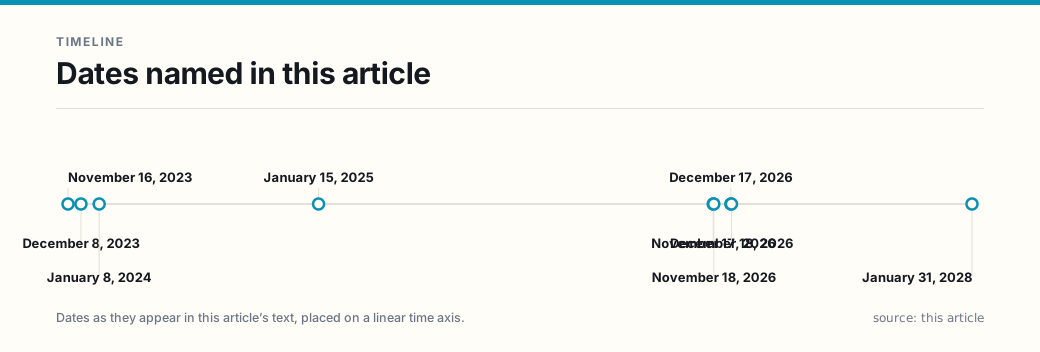
The rules meant to make that attack harder at the source have been on the books since December 2023 but were stuck in an approval limbo. On November 17, 2026 they finally take effect, and wireless providers must comply with them by December 17, 2026. That date is when the protections below stop being optional. The compliance-date announcement for the port-out half of the same order was published a day later, putting that deadline at December 18, 2026 — see below.
What your carrier must now do
The Federal Communications Commission (FCC) adopted the SIM Swap and Port-Out Fraud Order on November 16, 2023 (published at 88 Fed. Reg. 85794 on December 8, 2023). An announcement published November 17, 2026 sets the missing dates: effective that day, with compliance required 30 days after publication. For SIM changes, the rules require wireless providers to:
| # | Requirement | What it means for you |
|---|---|---|
| 1 | Respond to failed authentication on a SIM change request | A wrong PIN or wrong answer cannot simply be retried until it works |
| 2 | Notify you immediately, before a SIM change completes | You get an alert while there is still time to stop a takeover |
| 3 | Offer every customer a free lock or freeze on SIM changes | You can block SIM changes outright at no cost |
| 4 | Tell customers in advance about account protection measures | You can find out these options exist without asking a lawyer |
| 5 | Provide a clear process to report SIM fraud, and promptly investigate, remediate and document it | A complaint path with follow-through, not a dead-end call center |
| 6 | Keep records of SIM change requests and authentication methods for three years | There is a paper trail if you dispute a fraudulent transfer |
These are the Federal Register announcement’s own summary of the requirements in 47 CFR 64.2010(h), the customer proprietary network information (CPNI) rule the 2023 order added. We think item 3 is the one most worth acting on: a lock you set yourself removes the attack path entirely for that carrier, rather than relying on a support agent’s judgment under pressure.
The port-out side
SIM changes are half the problem. The other half is port-out fraud: the attacker poses as you, opens service with a different carrier, and has your number transferred (“ported”) to their new account. The 2023 order covers this too, in 47 CFR 52.37, requiring wireless providers to authenticate a customer securely before redirecting a phone number, to notify the customer of a port request before it completes, to disclose account protection measures in advance, to offer a free lock or freeze, and to maintain a documented process for fraudulent-port reports.
Those provisions were held back by the same approval requirement, and the commission’s Wireline Competition Bureau published a second announcement to release them: FR Doc. 2026-23522, scheduled for publication on November 18, 2026, makes 47 CFR 52.37 effective on publication and requires compliance by commercial mobile radio service providers 30 days later — December 18, 2026 by our count from the publication date. That is one day after the SIM-change compliance date, and the gap is arithmetic, not sequencing: both documents set their own 30-day clock, and they published a day apart. The information collection behind it carries a different OMB control number, 3060-0742, approved January 15, 2025 and running to January 31, 2028.
Why the rules took three years to go live
The sequence is unusually long, and it is worth knowing so the dates do not look contradictory. The FCC adopted the order in November 2023, and most of it took effect January 8, 2024. But the provisions above contained federal information-collection requirements, which under the Paperwork Reduction Act cannot take effect until the Office of Management and Budget (OMB) approves them. OMB approved on January 15, 2025 (Control No. 3060-0715), and the FCC’s rules said the delayed provisions would take effect only when the agency published a separate announcement setting the dates. That announcement — Federal Register document 2026-23400 — did not appear until November 17, 2026. The gap between OMB approval and the announcement is the FCC’s own publishing sequence; the announcement states the approval and dates without explaining the intervening delay.
What to do — before and after the compliance dates
The rules change what your carrier must offer. They do not change what an attacker can already do with a phished password. So:
- Ask your carrier for a port-out PIN and any account lock today. The exact feature name varies by provider, and many carriers already offer such locks voluntarily; the mandatory free lock option arrives with the December 17, 2026 compliance date.
- Move your most important accounts off SMS codes. A passkey or authenticator app code does not depend on your number at all. Which methods survive phishing, and which account to convert first, is covered in Two-Factor Authentication: Which Method to Use, and Which Accounts First.
- Treat a SIM change alert as an emergency. After December 17, 2026 the notice should arrive before the change completes — that window is for you to call the carrier’s fraud line, not to ignore a “verification” text.
- Watch for look-alike scams. Expect fraud messages pretending to be your carrier’s new “SIM lock” service, asking you to confirm a code or click a link to “stop a transfer.” A real SIM-change notice comes without links to enter codes into. The pattern-matching checklist is in How to Spot Phishing, and if your number was taken, What to Do After a Data Breach Notice and Credit Freeze, Fraud Alert, or Credit Lock cover the financial follow-up.
The bottom line
From December 17, 2026, a US wireless carrier that fails to notify you before a SIM change, refuses you a free SIM lock, or leaves your fraud report hanging is out of compliance with federal rules; from December 18, 2026 the same is true of a port request it completes without telling you. That is a real shift after three years of voluntary practice. But these are provider duties, not personal immunity: the attack still starts with someone persuading a support agent they are you, or you handing over a code. Lock the number, move authentication off it, and the FCC rules become a second line of defense rather than the only one.
Byte is the technology site of the Omni Mundi Compendium network. For what the same FCC rulebook does about unwanted calls, see the sister coverage on stopping robocalls and texts.
This article is general information about account security, not legal advice. It is AI-written and independently AI-reviewed before publication; the review standard and this article’s findings are recorded in the network’s editorial review log.
Frequently asked questions
- When do the FCC's SIM swap rules take effect?
- The Federal Register announcement was published November 17, 2026, and the six SIM-change provisions became effective that day. Wireless providers must comply with them by December 17, 2026 — 30 days after publication. The port-out rules in 47 CFR 52.37 got their own announcement, published November 18, 2026, which puts compliance at December 18, 2026.
- What does the FCC now require wireless providers to do about SIM swap fraud?
- Six things: handle failed authentication on SIM change requests, notify you before a SIM change completes, offer every customer a free lock or freeze that blocks SIM changes, disclose what account protections exist, run a clear process to report and fix SIM fraud, and keep records of SIM changes and authentication steps for three years.
- Do the rules make SIM swap fraud impossible?
- No. They raise the bar at the carrier, where most SIM swaps start, but they cannot stop phishing that hands an attacker your password, and they do not cover every account type. Moving logins off SMS codes remains the stronger fix.
- How do I lock my SIM or set a port-out PIN right now?
- Contact your wireless provider and ask specifically for a port-out PIN and any account lock it offers; the exact name and steps vary by carrier. The free lock option becomes mandatory for providers on December 17, 2026, and many carriers already offer similar locks voluntarily.
- Is SMS two-factor authentication still okay?
- It is the weakest factor still in wide use, because an attacker who controls your number receives those codes. Use it as a placeholder, not a destination — app codes and passkeys do not depend on your phone number.
Sources
Each source is a primary or official reference, checked before publication. Links open the original.
- Federal Communications Commission, 'Protecting Consumers from SIM-Swap and Port-Out Fraud,' Final rule; announcement of effective and compliance dates, WC Docket No. 21-341, FR Doc. 2026-23400, filed November 16, 2026, published November 17, 2026 (federalregister.gov/documents/2026/11/17/2026-23400/protecting-consumers-from-sim-swap-and-port-out-fraud) — the six SIM-change requirements under 47 CFR 64.2010(h), the OMB approval of January 15, 2025 (Control No. 3060-0715), and the effective and 30-day compliance dates
- Federal Communications Commission, Wireline Competition Bureau, 'Protecting Consumers from SIM-Swap and Port-Out Fraud,' Final rule; announcement of compliance date, WC Docket No. 21-341, FCC 23-95, FR Doc. 2026-23522, scheduled for publication November 18, 2026: makes 47 CFR 52.37 effective on publication and requires compliance by commercial mobile radio service providers 30 days later, records OMB Control No. 3060-0742 with approval January 15, 2025 and expiration January 31, 2028, and lists the four port-out duties — notice before a port completes, advance notice of account protection measures, a free lock or freeze, and a documented process for fraudulent-port reports — https://www.federalregister.gov/d/2026-23522
- Federal Communications Commission, 'Protecting Consumers from SIM-Swap and Port-Out Fraud,' Report and Order FCC 23-95, published at [88 Fed. Reg. 85794](https://www.federalregister.gov/documents/2023/12/08/2023-26338/protecting-consumers-from-sim-swap-and-port-out-fraud) (December 8, 2023) — the framework adopted November 16, 2023: secure authentication before a number is redirected to a new device or provider, immediate notification of SIM change and port-out requests, and the January 8, 2024 effective date with the information-collection provisions delayed pending OMB review
- eCFR, 47 CFR 64.2010(h), Safeguards on the disclosure of customer proprietary network information — SIM change requirements in the Code of Federal Regulations (ecfr.gov/current/title-47/section-64.2010)
- Federal Bureau of Investigation, Internet Crime Complaint Center, Public Service Announcement I-020822-PSA (February 8, 2022) (ic3.gov/PSA/2022/PSA220208) — SIM swap complaints and adjusted losses: 320 complaints with about $12 million from January 2018 through December 2020; 1,611 complaints with more than $68 million in 2021
- Federal Communications Commission, consumer guide 'Cell Phone Fraud' (fcc.gov/cell-phone-fraud) — the definitions of SIM swapping, port-out scams, cloning and subscriber fraud, and the note that eSIMs reduce but do not eliminate the risk